September 2018


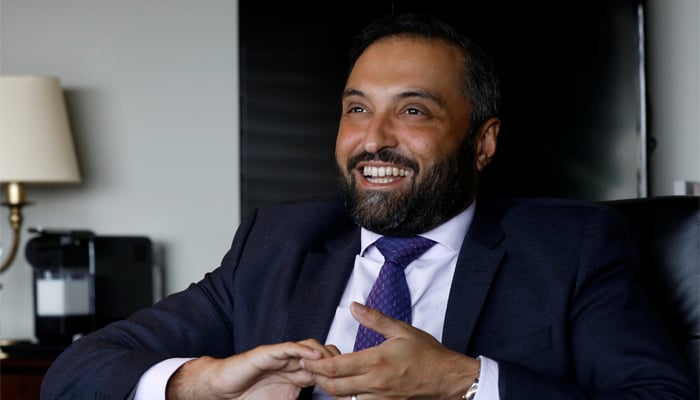
KARACHI: On September 7, 2018, Pakistan Tehreek-e-Insaf (PTI) government issued orders to stop releasing funds for Public Sector Development Programme (PSDP), as per the conditions outlined by the previous government. On Wednesday it was learnt that approximately 400 unapproved projects have been put on hold, reducing the total allocations for PSDP by Rs380 billion.
Analysts and stock market players have hailed this move by the sitting government. “This is a wise decision by the government because the current fiscal deficit of the country not only makes hefty PDSP impractical but it would also mean even more depletion of foreign exchange reserves as well as inflation,” said Insight Securities Director Research Zeeshan Afzal.
The previous government of Pakistan Muslim League – Nawaz (PML-N) had announced a rather hefty PSDP programme, with approximately Rs1.6 trillion allocated to the public sector development. In April, the announced budget proposed Rs800 billion for the federal government, Rs850 billion for provinces, out of which 17.4 per cent was to be funded by foreign loans amounting to Rs180.3 billion. PSDP allocations also included Rs100bn in block allocations for the next government, which has been overturned by it.
In the PSDP for 2018-19 as per the National Economic Council (NEC) approval during the tenure of the last regime, the Planning Commission inserted around 400 to 450 unapproved schemes as part of the PSDP. Even back then it was debated that projects in the PDSP need to follow a planning and practicality evaluation procedure, before being included as part of the program. However, they were still added in the programme, resulting in differing funds allocations as noted by the Finance Ministry and the Planning Commission.
Industry experts are also of the opinion that the slashed funds from PSDP programme should be used to finance water and other non-developmental issues, instead of focusing on infrastructure, or ‘popular’ projects. PTI officials have also indicated that funds from projects like laptop schemes would be removed from the allocations for PSDP.
Most of the projects being considered for removal are the ones that have not yet been approved by the Planning Commission or have had less than 20 per cent expenditure, sources said. Such projects include Development Communication, Establishment of Pakistan Urban Planning and Policy Center, Reform and Innovation in Government for High Performance, Technical Studies for Planning Commission, and Building of Officers of Economist Group among others.
Shajar Capital Pakistan (Private) Limited CEO Rehan Ateeq said that cutting down on PSDP will not have any long-term negative effect on the stock market either. He said, “Despite the announcements, the stock market has not had any major changes, and the stocks in the banking industry and food companies are still going well.” He also said that the stock market will remain locally driven in the next few weeks.

HONG KONG: Hong Kong led a rally in Asian markets on Thursday following reports that the US had reached out to China in a fresh bid to avert a trade war, providing some much-needed respite to weary investors.
News that Treasury Secretary Steven Mnuchin had invited top Chinese officials for talks comes just under a week after Donald Trump threatened to impose tariffs on all $500 billion worth of imports from China.
The president's top economics adviser Larry Kudlow called the move a "positive thing" and added that "you could say that communication has picked up a notch".
Investors welcomed the reports with Hong Kong soaring 1.9 per cent, having fallen for six straight days and into a bear market, which is a 20 per cent drop from its January record high.
Shanghai climbed 0.8 per cent, Singapore added 0.3 per cent and Seoul gained 0.1 per cent while Tokyo ended the morning session 0.8 per cent higher.
"Markets should welcome the news of possible resumption of high-level trade talks between China and the US," said Tai Hui, JP Morgan Asset Management chief market strategist for Asia-Pacific.
"This may reflect strong feedback from the US corporate sector against further expansion of the list of Chinese exports that would be subjected to higher tariffs."
However, while he warned the latest round of threatened tariffs could be delayed, he said Beijing had already agreed to buy more American goods to reduce its gaping surplus with the US and open up the economy further, so it might not be able to offer much more.
"The road to a more sustained resolution is still challenging," Tai added.

US firms worried

The tariffs are clearly starting to bite US firms.
On Thursday, the American Chamber of Commerce in China said a survey found most companies are seeing rising costs, lower profits and tighter scrutiny.
That comes a day after the Federal Reserve reported increasing fears across the United States about the trade row, with some businesses planning to curtail capital spending, while a new lobby group announced plans to campaign against the levies in November´s elections.
The optimism also supported emerging-market and high-yielding currencies that have been battered by a flight to safe-havens such as the dollar and yen.
South Africa´s rand rose one per cent, the Russian ruble gained 0.8 per cent and the Australian dollar jumped 0.9 per cent. The South Korean won put on 0.7 per cent while the Indonesian rupiah gained 0.3 per cent.
Energy firms also climbed with investors keeping tabs on Hurricane Florence as it surges towards the US east coast, with the Carolinas and Georgia in its crosshairs.
Concerns about the massive destruction the storm is likely to cause has helped send oil prices higher, while a forecast-beating draw in US stockpiles added to the increase.
While both main contracts dipped slightly Thursday, Japanese energy firm Inpex and Hong Kong-listed PetroChina soared three per cent.


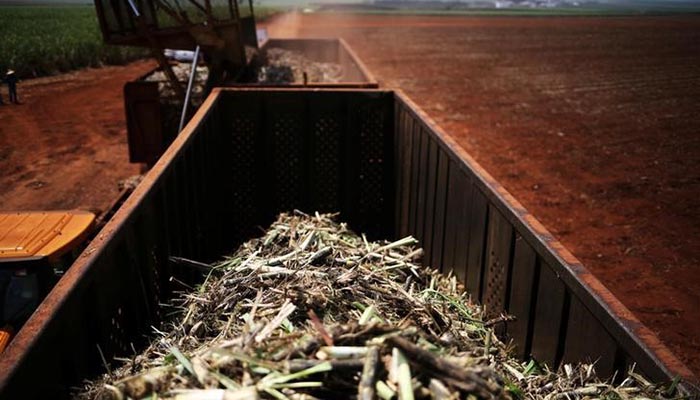
SYDNEY: The policies of India and Pakistan have contributed to a global glut in the world’s sugar market, Australia’s Minister for Trade Simon Birmingham told Reuters.
"It is clear that export subsidies introduced recently by the Indian and Pakistan Governments have contributed to a growing glut on global markets," Birmingham said in an emailed statement to Reuters.
"Australia has expressed its concerns to the Indian and Pakistani governments at the highest levels in the clearest possible terms," he said. 
"Raw sugar futures in New York slumped to a 10-year low of 9.91 cents on August 22 as India and Pakistan both imposed price subsidies to boost local production," the minister noted. 

ISLAMABAD: Federal Information Minister Fawad Chaudhry has rejected media reports that the Pakistan Tehreek-e-Insaf (PTI) led government was planning to increase income tax on salaried individuals, saying no such proposal was under consideration.
Chaudhry's comments came after newspaper reports that the government was planning to reverse tax concessions of the previous government and bring down the threshold of income tax exemption on salaried class.
Responding to a question during a press conference here in Islamabad on Thursday, the minister also denied reports of an increase in gas and electricity tariff.

"Often times, newspapers print headlines about things that never happen. They said tariff of gas and electricity was being increased, but it was not true. There were newspaper reports today of the government increasing income tax rates for the salaried class. Nothing like this has happened either," he said.
Chaudhry said that proposed amendments in the Income Tax ordinance were not on the agenda of the cabinet session chaired by Prime Minister Imran Khan earlier in the day. 
He dispelled the impression that federal cabinet had rejected the amendments in the Income Tax ordinance, adding that a decision has been taken to bring the proposed amendments in the next parliamentary session.

'Rs 8 billion in subsidies' 

The PTI government has decided to conduct an audit of metro bus projects in Punjab which were initiated by the previous Pakistan Muslim League-Nawaz government.
Information Minister Fawad Chaudhry outlined the costs associated with metro bus projects in Islamabad, Lahore and Multan. “The government of Punjab is giving a subsidy of approximately Rs8 billion on these projects, If this subsidy is not given, all of these projects would close,” Chaudhry said.
The federal minister informed reporters that yearly the Punjab government gives a subsidy of Rs4.2 billion on the Lahore metro bus. He added that the Rawalpindi-Islamabad metro bus was built at a cost of approximately Rs39 billion and the government was paying a subsidy of Rs2 billion on this project. The cost of the metro bus in Multan was Rs29 billion while the subsidy being given on it was Rs2.1 billion.

PTV Board of Governors

The cabinet also approved the formation of a Board of Governors (BoGs) for Pakistan Television (PTV), the chairman of which will be a minister and for the first time eight independent people will be included.
According to Chaudhry, the board would comprise a minister who would be the chairman, secretary information broadcasting division would be the vice chairman, chairman Higher Education Commission, additional secretary finance, DG ISPR, MD PTV.
The minister informed the press of some members which included Barrister Ali Zafar, Arshad Khan who was being considered for PTV MD, Zohair Khaliq, Shela Roth, Professor Ijaz ul Ehsan, Dr Humayun Ehsan and Savail Hussain. 


ANKARA: Turkey's central bank surprised markets on Thursday with a bigger than expected rate hike to battle soaring inflation and boost the lira, prompting the embattled currency to surge in value.
Turkey has in recent weeks been battling through one of the most troubled periods for its economy under the rule of President Recep Tayyip Erdogan, with the lira battered on currency markets in August.
The central bank hiked the one week repo auction rate 625 basis points from 17.75 percent to 24 percent, significantly higher than the Bloomberg consensus of an increase to 21 percent.
The lira reacted strongly to the decision, rising by five percent in value to 6.0 lira to the US dollar. It later shed some of those gains but was still up nearly three percent in value at 6.16 to the dollar after 1330 GMT.
The magnitude of the hike was all the more surprising given that just before the decision Erdogan had slammed interest rates as a "tool of exploitation".
"It was a big surprise to us, but probably to every Turkey-watcher," said Nora Neuteboom, an economist at ABN Amro, saying the move was a "positive signal" with the bank wanting to show its independence and commitment to fight inflation.
"However, one swallow doesn't make a summer," she warned.
In another bid to prop up the lira, Erdogan earlier on Thursday ordered by decree that property agreements in foreign currencies would not be allowed.

'Strong monetary tightening'

The bank had not touched interest rates since early June with markets becoming increasingly concerned that the policy of the nominally independent bank is being dictated by Erdogan.
There had been indications from the bank that it would raise rates after inflation came in at nearly 18 percent in August.
The bank described the hike as a "strong monetary tightening to support price stability".
It vowed the tight stance in monetary policy would be "maintained decisively until inflation outlook displays a significant improvement".
The bank must balance concerns over slipping growth, which, although a robust 5.2 percent in the second quarter on an annual comparison, showed signs of weakness with some analysts predicting Turkey is heading for recession.
The bank´s intervention was the latest aggressive rate hike to calm economic turbulence in an emerging market after the Argentinian central bank´s recent hike from 45 to 60 percent on August 30.
But Neuteboom of ABN Amro said much more was needed for Turkey to turn around "the negative spiral" the economy is in.
"Turkey needs structural reforms to increase productivity, to decrease its dependence on short-term portfolio flows and to decrease the rigidness in the labour market."

'Tool of exploitation'

Economists have argued the nominally independent bank has come under pressure from Erdogan who, only a couple of hours before its decision, launched a blistering attack on the bank and interest rates.
He earlier charged the bank with failing to control inflation and again aired his unorthodox view that low rates bring inflation down.
"Interest rates are the cause, inflation is the result. If you say ´inflation is the cause, the rate is the result´, you do not know this business, friend," he added.
Anthony Skinner, director of Middle East and North Africa at Verisk Maplecroft, told AFP he believed the hike had already been agreed. "Erdogan´s speech... was intended to put distance between himself and the (bank´s) decision."
The bank implemented what economists described as a hidden interest rate hike in mid-August, forcing banks to borrow at the higher 19.25 percent through the overnight lending facility.
The bank later said funding would be provided via the policy rate, the one week repo auction rate, instead of through overnight lending from September 14.
Analysts say the lira´s plunge last month had been sparked by a combination of concerns over domestic policymaking and a crisis in relations with the United States.
As well as being seen to undermine the independence of the central bank, Erdogan in July stunned markets by appointing his son-in-law Berat Albayrak as finance minister.
Relations with the US deteriorated last month after Washington imposed sanctions on two Turkish ministers over the detention of an American pastor and President Donald Trump doubled steel and aluminium tariffs on Turkey.


 KARACHI: Pakistan’s chemicals-to-energy conglomerate Engro Corp has seen its fortunes rise on the back of massive Chinese investment, but plans to shape its future growth around the country’s vast population and expanding the middle class, its chief executive said.
Engro Corp, best known for its fertilizer and petrochemicals factories, as well as engineering projects, is Pakistan’s largest listed conglomerate, and, after recovering from a brush with bankruptcy in the early part of this decade, is now sitting on a $500-million cash pile.
It has been a major beneficiary of Beijing’s Belt and Road Initiative (alternatively known as the One Belt One Road (OBOR)) splurge, working with Chinese firms on coal and power projects worth billions of dollars.
Engro’s rising fortunes since 2012, when its factories were crippled by gas shortages, mirror the improvements in Pakistan, a nuclear-armed nation where economic growth has accelerated due to vast Chinese investment and a sharp drop in militancy and power outages.
In the near term, Engro’s outlook is linked to a mile-long $1.5-billion coal mine in the Thar desert near the border with India, part of Beijing’s pledge to invest about $60 billion in Pakistan.
But with Pakistan’s new government hinting it may review Belt and Road contracts due to concerns they were too expensive, some analysts see risks on the horizon for Engro and say planned power plants around the mine may struggle to obtain financing.
Ghias Khan, Engro’s chief executive, told Reuters this week he was "pretty confident" the government would not re-open deals with sovereign guarantees.
"If they do, that will have a very negative impact," Khan said.
This year, Pakistan’s economy has also been shaken by a shortage of dollars, and speculation Islamabad may turn to the International Monetary Fund (IMF) to ease current account pressures.

Consumer growth

Undeterred by Chinese investment jitters and the recently-wobbly economy, Khan said Engro was weighing acquisitions and starting new businesses in agriculture, healthcare, real estate, communications, and other consumer-linked sectors to profit from rising incomes in the Muslim majority country of 208 million people, 60 percent of whom are aged under 30.
"We’ve come to a realization what has gotten Engro where it is today is not good enough for our next phase of growth," Khan said in an interview at Engro’s ocean-front headquarters in Karachi, an Arabian Sea metropolis.
"What we are proud of is our ability to execute large-scale projects and put up large industrial complexes. But we are mindful we have to get into businesses, which are more related to the population growth and take us closer to the consumers."
In Karachi, mushrooming shopping malls and the ever-rising number of cars on the road point to a multi-year consumer boom as people’s disposable incomes have doubled this decade, analysts say.
Khan compared Pakistan’s current economic level, population growth, and per capita income — which stands at about $1,600 — to where China, South Korea, and India were at earlier points in their development.
"If you look at sectors that did well when they were where Pakistan is today ... like real estate, automobiles, healthcare, logistics — everything is somehow related or linked to population growth or the middle class," Khan said.

Coal bonanza?

The company, born out of an employees’ buyout of Exxon’s Pakistan operations in the 1990s, was also looking to go deeper into the petrochemicals sector, and was exploring projects to set up naphtha, ethane crackers or polypropylene facilities in the ports of Karachi or Gwadar, Khan added.
What Engro will do with its cash pile of about 60 billion rupees ($490 million) has been a hot topic in Pakistan’s equity market.
"One thing is very clear: how we invest these 60 billion rupees ... will determine how this organization looks 10-15 years from now," said Khan, adding a decision would be made "hopefully soon".
In the meantime, the company is busily expanding its coal projects in Thar, located in the remote deserts of Sindh province, of which Karachi is the capital.
Helped by Beijing’s cash and Chinese expertise, Engro began digging the Thar mine in 2016 with China Machinery Engineering Corporation (CMEC).
The coal will feed into a 660MW power plant Engro is building, part of about 4,000MW of generation planned by various Pakistani consortiums by 2021.
Pakistan says it has the world’s seventh largest coal reserves, but it is of the low-grade lignite variety and for decades successive attempts at large-scale mining have failed.
Analysts say Engro has locked in returns on equity of about 30 percent per annum, in dollar terms and with a sovereign guarantee, on the power projects.
Engro declined to reveal equity returns on power projects, but with Pakistan looking to control its ballooning current account deficit to avoid another IMF bailout, Khan said the new government was likely to want power plants that do not rely on imported fuel.

MKRdezign

Contact Form

Name

Email *

Message *

Powered by Blogger.
Javascript DisablePlease Enable Javascript To See All Widget